What to Do If You Are Arrested in Texas
What to Do If You Are Arrested in Texas

This is a practical, general guide based on Texas law and standard procedures. It is
not legal advice. Laws and local practices can vary by county and change over time. If you or someone you know is arrested, contact a licensed Texas criminal defense attorney as soon as possible for advice specific to your situation. An arrest is not a conviction.
1. During the Encounter and Arrest
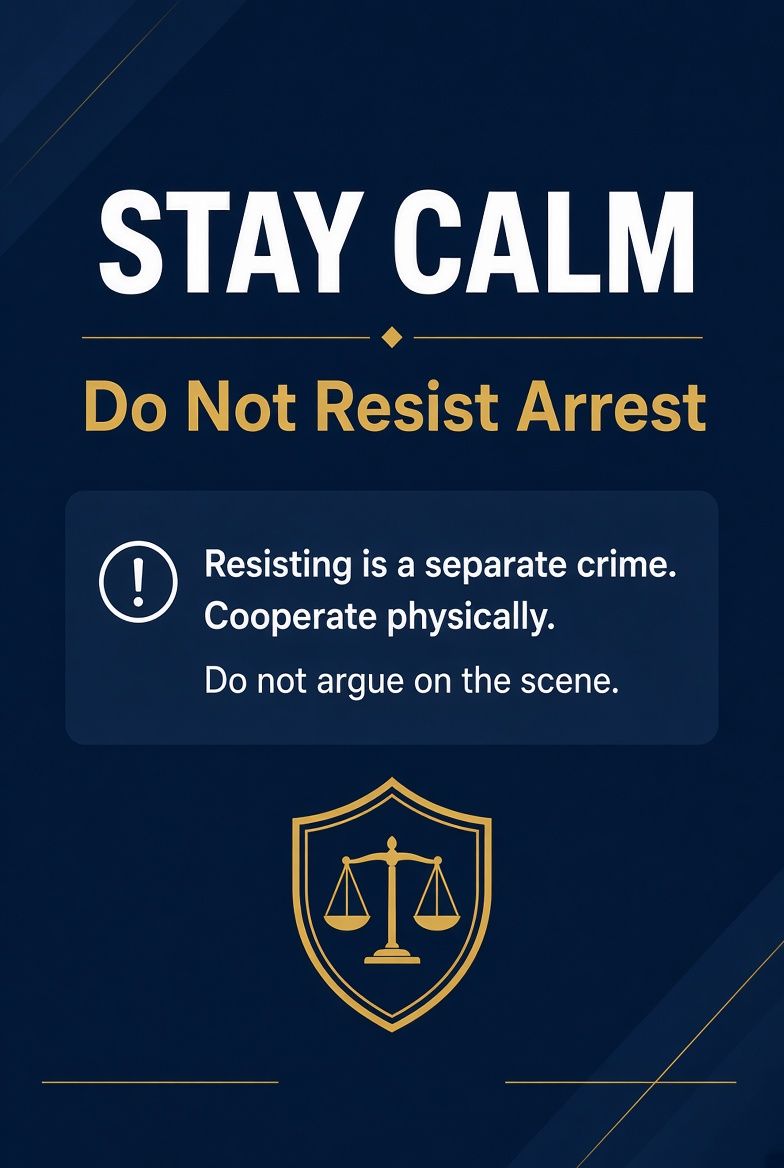
- Stay calm and do not physically resist, even if you believe the arrest is wrong or unfair. Resisting arrest, search, or transport is a separate criminal offense under Texas Penal Code § 38.03 and can make things significantly worse.
- Provide basic identifying information when lawfully required (typically your name, date of birth, and address). Do not provide false information. Beyond that, you generally do not have to answer investigative questions.
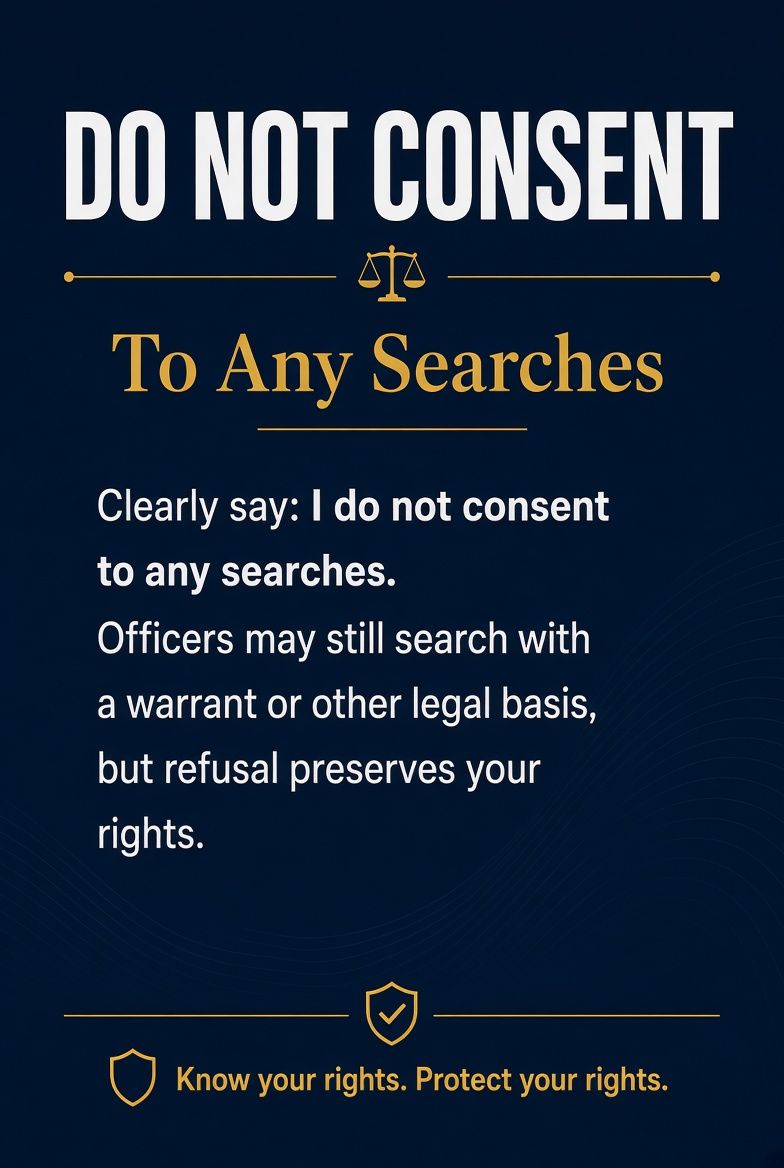
- Do not consent to searches of your person, vehicle, phone, home, or belongings. Clearly and politely state: “I do not consent to any searches.” Officers may still search if they have a warrant or another lawful basis (such as search incident to arrest or probable cause with an exception), but refusing consent preserves your ability to challenge the search later.
- Do not try to explain, argue, or “talk your way out of it.” Roadside or in-custody explanations are rarely helpful and often become evidence against you.
2. Invoke Your Rights Clearly and Immediately

You have the right to remain silent (protected by the Fifth Amendment and the Texas Constitution) and the right to an attorney (Sixth Amendment and Texas law). These rights apply even before formal Miranda warnings.
Say this clearly, calmly, and repeatedly if needed:
“I am exercising my right to remain silent and I want a lawyer.”
Then stop talking about the incident. Vague statements (“Maybe I should talk to a lawyer” or “I don’t think I want to answer”) may not be enough. Once you clearly request a lawyer, questioning about the case should stop until counsel is present (unless you reinitiate). Miranda warnings are required before custodial interrogation (you are in custody and being questioned in a way likely to elicit incriminating responses), not automatically the moment you are arrested. Texas has additional rules for written and recorded statements under Code of Criminal Procedure Article 38.22.
3. After You Are Taken into Custody (Booking)
You will typically be transported to a jail or processing center for booking (fingerprints, photos, personal information, inventory of belongings).
- You will usually have access to a phone system, but there is no guaranteed single “one free phone call.” Use it wisely: call someone who can contact a criminal defense attorney for you. Tell them where you are, your booking information if available, and ask them to get a lawyer. Do not discuss the facts of the case on the call.
- Assume that ordinary jail phone calls, visits, and conversations with cellmates are recorded or monitored and can be used as evidence. Do not discuss the case with anyone except your attorney.
- Do not post about the arrest or case on social media.
4. Magistration (First Appearance Before a Magistrate)
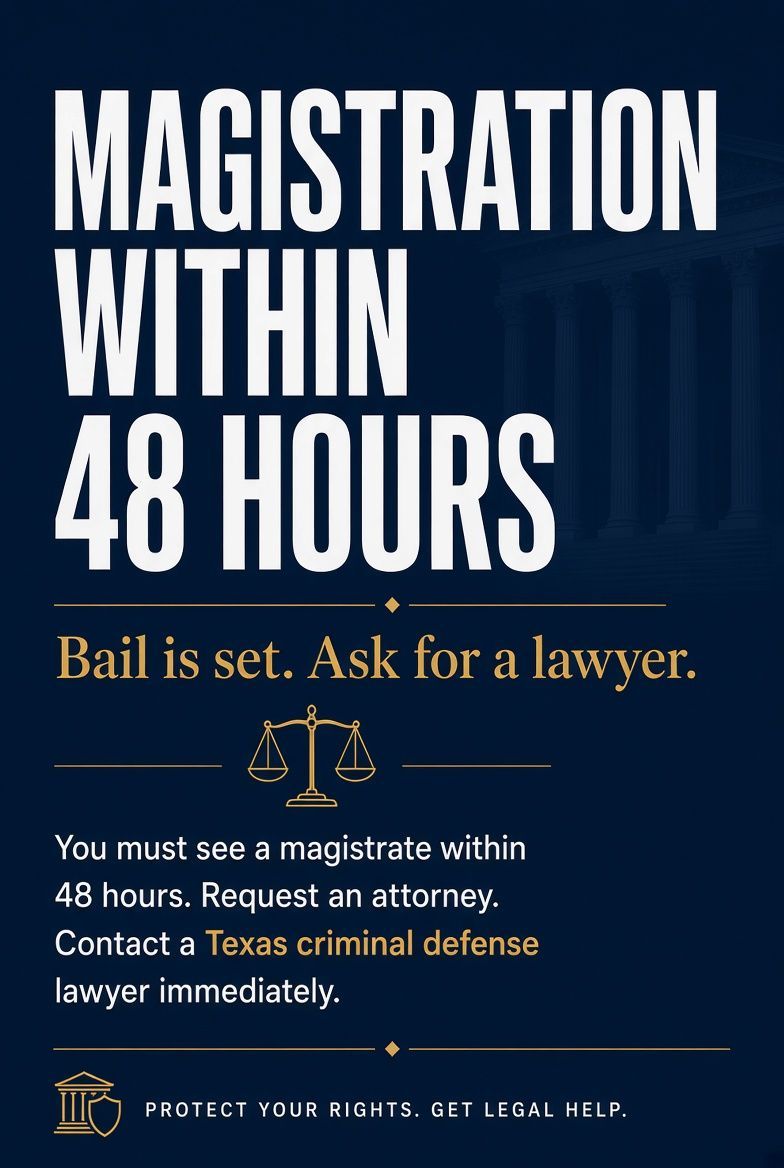
Under Texas Code of Criminal Procedure Article 15.17, you must be taken before a magistrate without unnecessary delay and no later than 48 hours after arrest (in person or by video). This is often called “magistration.” It is not a trial and does not determine guilt.
At magistration the magistrate will typically:
- Inform you of the accusation and any supporting affidavit.
- Advise you of your rights (including the right to remain silent, the right to counsel, the right to have an attorney present during interviews, the right to terminate an interview, and the right to an examining trial in appropriate cases).
- Address your right to request appointed counsel if you cannot afford one and explain the process.
- Set bail (or deny it in limited circumstances) and any conditions.
Bail is set based on factors including the nature of the offense, your ability to pay, ties to the community, likelihood of appearance, and safety considerations (Code of Criminal Procedure Chapter 17). Options generally include personal bond, cash bond, or surety bond (through a bondsman). Conditions (no-contact orders, ignition interlock in DWI cases, reporting, etc.) are common and must be followed exactly. For certain warrantless arrests, there are shorter timelines for a probable-cause determination before limited release is required.
5. Practical Next Steps

- Contact or have someone contact a Texas criminal defense attorney as soon as possible. Early representation helps protect rights, address bail, and begin investigating the case.
- If you cannot afford a private attorney, request appointed counsel at magistration (or as soon as the process allows).
- Write down everything you remember about the incident, stop, arrest, and statements while details are fresh. Identify potential witnesses. Preserve relevant evidence (texts, photos, receipts, location data) without altering it.
- Follow all bond conditions precisely. Violating them can result in bond revocation and return to custody.
- Attend every required court appearance.
- Do not contact alleged victims or witnesses if a no-contact condition or protective order is in place.
6. Common Mistakes to Avoid
- Physically resisting or arguing with officers.
- Consenting to searches or volunteering detailed statements.
- Discussing the case with anyone other than your lawyer (including on jail phones or with cellmates).
- Assuming that the absence of an immediate Miranda warning means you can freely talk or that the case will be dismissed.
- Ignoring bond conditions or court dates.
- Posting about the case online.
Special Note on Common Cases (e.g., DWI)
In DWI arrests there are often additional issues involving breath or blood testing, implied consent, and a separate Administrative License Revocation (ALR) process that can suspend your driver’s license. Refusal of a chemical test after arrest can have administrative consequences, and officers may seek a warrant for a blood draw in many cases. These issues are highly fact-specific—speak with a lawyer promptly.
Bottom line: Stay calm, do not resist, clearly invoke your right to remain silent and request a lawyer, do not consent to searches, and get legal help quickly. The early hours and days after an arrest are critical for protecting your rights and options.
For official statutory language, see Texas Code of Criminal Procedure Articles 15.17, 14.06, 38.22, and Chapter 17, as well as the Texas Penal Code. Always consult a licensed attorney for advice tailored to your facts.
Contact Us Today
We're Ready To Help You
Contact The Law Office of Dr. E.R. Báez, P.C. Today! A member of our team will be in touch shortly to confirm your contact details or answer any questions you may have.